Showing posts with label Booker. Show all posts

The Gathering - J's Review


Two years ago, I had a letter from Earnest. He was writing to tell me that he was leaving the priesthood, though he had decided to stay with his little school in the high mountains....'I have no place left to live but in my own heart,' he wrote, meaning he would conduct his life as before, but on privately different terms.

And I thought this was the stupidest stuff I had ever heard until, sitting on a stool in the Shelbourne bar, I wondered what might happen if I just carried on as usual, told no one, changed nothing, and decided not to be married after all.

And I wondered how many people around me are living with and sleeping with and laughing with their spouses on just this basis, and I wondered how sad they were. Not very, by the looks of it. Not sad at all.
The Gathering, by Anne Enright, is the story of Veronica, and her coming to terms with the suicide of her favorite brother, Liam. It is her unenviable task to travel from Ireland to England to recover his body, and bring it home for the funeral.

Veronica is falling apart following her brother's death. In addition to her grief, she harbors a secret, or at least, she thinks she does. She is hazy on her memory of an incident during their childhood, and fears that perhaps it may have been the first step toward Liam's eventual death. Her struggle with this memory, with trying to remember what did and what did not happen, and to whom, unravels her happiness and further strains her marriage. You get the feeling that she has never been a joyous person, she is too cold and critical for that, but she did have love and happiness, which are currently overwhelmed by her sadness and her memories. She is a woman in the process of falling apart.

Veronica tells the story of her family, going back to the day her grandparents first met, coming forward to her mother's passive life, and then to that of her many brothers and sisters. She harbors both love and disdain for her mother, whose 17 pregnancies, resulting in 12 children and 5 painful miscarriages, Veronica sees as proof of her mother being unwilling to refuse her father's carnal desires. That her mother might have shared these desires never seems to cross her mind.

Already a cold person, Veronica shuts down emotionally in the period following her brother's death. She resents her husband for wanting sex so soon after the death, resents him trying to prove to her that she is still alive. After that first encounter, she refuses to come to bed any more, instead staying awake all night, every night, drinking wine and waiting for him to get up for work before she herself collapses into bed.

The title of the book, The Gathering, made me think this was going to be the story of a family coming together, and of the joys and recriminations that might come to light at such a gathering. But at least 3/4 of the book is told in her meandering way, as she travels through memories and stories, while on the way to and from England on her sad task. Only at the end do we meet her siblings, and find ourselves at a surprisingly muted event.

If I were to read this review up until this point, I would think that The Gathering isn't really worth reading, and that Veronica is a character that I would not like. But Enright's writing is so beautiful, and she is able to bring you into Veronica's mind so well that you feel sympathy for her, for what she's been through, for her upbringing. You hope for her to find peace with her family again, and joy within her marriage. The end is too ambiguous for that, and I walked away feeling someone dissatisfied.

I have seen The Gathering compared to The Dubliners, by James Joyce. One big difference is that The Gathering is a novel, while The Dubliners is a book of short stories. I've only read the most famous story in that book, The Dead, which is a story that touched me very deeply. The Gathering is similar in its prose and imagery, and in that the book seems to meander along until finally you get to the end, and it turns out that the end is what you were waiting for all along. In The Dead, however, that end is a beautiful respite, and a glimpse into love that is not jealous or unkind, despite the jealousy and unkind thoughts that were there moments before...a love that transcends this mortal world, however mortal the players. The Gathering offers no such great reward.

I would recommend this book to people who love beautiful, evocative writing. Enright is a gifted writer in this aspect. I would not recommend this book for anyone seeking an easy, quick read, as the twists and turns and dark subject matter make this a somewhat difficult read.

The Gathering - Anne Enright

The 2007 winner of the Man Booker Prize. The story is mostly set in Ireland (Dublin) with some of the tale in Brighton and South England. Veronica Hegary is one of the nine surviving children in her family and at the start of the novel her brother Liam has just died. She dwells on the past, their life growing up and what it was like for her grandparents. It is only about half way through we learn how Liam died and the circumstances surrounding his death.

Veronica does not really love her husband any more although she cares deeply for their two daughters. She suspects he is having an affair as they are no longer sleeping together. She Spends time rewritting the past and imaging the life her grandmother Ada had with her husband Charlie and his friend Lamb Nuggent. Slowly she remembers the past and what really happened. The events she remembers help piece together the truth behind Liam's death.

I didn't really enjoy this novel. It was just too bleak and I don't think I was really in the mood to read it. The ending was slightly more uplifting with some light at the end of the tunnel which helped a little. It was well written, I just wasn't in the right frame of mind for it.

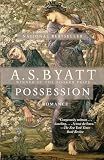
Possession

This 1990 Booker Prize winner was second only to LOTR on the poll of what books I should take. It seemed to be popular with the visitors and I can understand why. I read this during my unfortunate delay before departure. It was absorbing and while a bit lengthy at over 500 paperback pages, enjoyable. It is complex, literary, stylistically varied, and meta. There are various writing styles employed from poetry, critical academia, memoir writing, fairytales, to epistolary writing. While I found the ending just a tad too maudlin and the modern characters Maud and Roland not as well drawn out as Ash and Christabel, I liked the book overall. Byatt obviously took care in tracing the mystery aspect, and it is certainly not a conventional romance (or romances). It has many themes and interesting implements. It has academics writing not about poets, but also other academics. There's a definite sense of meta literary and commentary beneath the surface. The idea of not only romantic possession, but that which possesses us from the long gone writers. It reminds me of Shakespeare academia and the sheer obsession academics have about him whoever he may be. Just a little thing could just how history views people and how we are enthralled, or "possessed" with the dead and ideas from and of them. I am glad to own this novel as I find that it will be immensely rereadable.

Crossposted from aquatique.net

J's Review: Posession: A Romance

Maud shivered, as she always shivered, on reading this document. What had Christabel thought, when she read it? Where had Christabel been, and why had she gone, and where had Randolph Ash been, between July 1859 and the summer of 1860? There was no record, Roland said, of Ash not being at home. He had published nothing during 1860 and had written few letters - those there were, were dated from Bloomsbury, as usual. LaMotte scholars had never found any satisfactory explanation for Christabel's apparent absence at the time of Blanche's death, and had worked on the supposition of a quarrel between the two women. This quarrel now looked quite different, Maude thought, without becoming clearer.
I finally finished reading Possession: A Romance, by A.S. Byatt. I'm sorry to say that I never felt truly drawn into the story. It reminded me of something my mom once said when I was working on my Masters Degree in Comparative Literature. She said, "I'm not a huge fan of 'capital L Literature'. What I want to read is a good story." Not that the two are mutually exclusive, and I would argue that the best of 'capital L Literature' is great because of the story, not because of the genius of the author. Reading Possession, I never got sucked in, I was always waiting for the story to have some passion, some caring for the characters, some real drama. I found it had tenderness toward its characters, and there is real skill in the way that Byatt interweaves diaries, letters, and narrative to tell her story. But again, I couldn't make myself care about any of it.

The book starts with a young, frustrated academic, Roland Michell, doing some research on his subject, (fictional) Victorian poet Randolph Ash. He comes across some unfinished letters in Ash's handwriting, tucked amongst the pages of a book in the library. Impulsively, he tucks the letters into his wallet, rather than alerting the librarian of their existence, or at least tucking them back where they belong. The letters appear to be to a woman that Ash has just met, and feels a connection to. He wants to see more of her. But who is she? Scholarship on Ash is that he was a faithful husband, happily married to the same woman for over 40 years. Roland asks around, and ends up entering into a partnership with Maud Bailey, a scholar who studies the life and works of a contemporary of Ash, Christabel LaMotte, the woman for whom Ash's letter was meant.

Roland and Maud go on a search for the truth, which they are hiding from their contemporaries in LaMotte and Ash studies, hoping to be the ones to break the story to the academic world, which would be a huge feather in their caps, and a great help in their careers as well. The rest of the book travels between their story and that of LaMotte and Ash, which is told mainly through their letters to one another, through their respective poems, and through diaries written by Ash's wife and LaMotte's cousin. It's intriguing enough, with plenty of twists and turns and surprises to keep the reader interested. Unfortunately, for me, Byatt kept her characters at an emotional distance, so while I was slightly interested in finding out what had happened between these Victorian poets 150 years ago, I sort of resented the amount of time and effort that I had to put into the discovery.

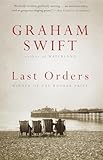
Last Orders

This Booker Prize winning book by Graham Swift tells of four men on a day trip to scatter their friend's ashes to the sea. The chapters are short and the narratives switches with each chapter. Most are told by Ray, the closest friend of the dead man Jack Dodds. There are numerous flashbacks revealing the lives of all the men and a couple of others in their lives. The dialogue is quite sharp and well written; Swift has a knack for characterisation. The language and changing perspectives makes it evocative. I sometimes managed to feel the bitterness and the anger that some of the characters do when they narrate. It is very English; all the characters have a working class background and there is something very stylistic and true about the way he writes about their livelihood. If anything, it feels sincere even if real working class Londoners do not all the issues these characters did. I liked the book for the most part, but it got bit depressing the further you went. The flashbacks reveal missed opportunities, unsaid things, wrong choices, bad luck, and estranged relationships. The ending, as with life, is open ended. Not a very uplifting read, but Swift does have a good voice throughout the story.

For a review of the film as well, go to aquatique.net.

The Sea, the Sea - Iris Murdoch


Title: The Sea, The Sea
Author: 
Iris Murdoch
Country: 
UK
Year: 
1978
Pages: 
502
Rating: 
5 out of 5

First sentence:
 The sea which lies before me as I write glows rather than sparkles in the bland May sunshine.

The Sea, the Sea starts out in the form of a journal, written by Charles Arrowby, a newly retired playwright/actor/director, who has adjourned to an old house outside a small village on the English coastline. He has decided to leave the London scene for good, and spends his time cooking simple meals--poached eggs on nettles, spring cabbage cooked slowly with dill, porridge with brown sugar and cream, and vegetarian stew--and diving into the sea for daily swims.

The beginning of the book sets this scene, describing his meals, daily activities, and his new home in an impromptu, journalistic style. Then, about 50 pages in, two things change. First, we see Charles for the first time from an outside perspective, through the letter he receives from Lizzie, an old flame. Second, Charles spots his long-lost childhood love, Hartley, in the local village. As the book shifts focus to Charles somewhat bizarre quest to destroy Hartley's marriage and re-claim her for himself, Murdoch shifts to a more straightforward narrative technique.

The opening scenes of Charles' adjusting to a life of retirement helped me as a reader to retain a semblance of sympathy for a character that becomes quite despicable. Although I detested his actions (he seems to make the wrong decision at every turn, and succeeds in lashing out at everyone around him), I could see the unacknowledged hurt and suffering that spurred him to take those actions. I really loved the gothic undertones; there were parts of the story that sent shivers down my spine and were very unnerving, in a way that most modern horror stories fail to achieve.

At one point, Charles' cousin asks him "What is the truth anyway?" And, I spent much of the novel trying to figure that out. I never did quite succeed, but I believe that is part of Iris' point. I also loved that the sea is a character itself, and we see its many emotions: cruel, gentle, and playful, amongst others, through the course of the novel. The story was very much a page turner, and I would definitely recommend it to others!

"Jealousy is perhaps the most involuntary of all strong emotions. It steals consciousness, it lies deeper than thought. It is always there, like a blackness in the eye, it discolours the world." (p.84)

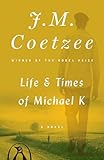
Life & Times of Michael K - 3M's Review

The Life & Times of Michael K won the Booker Prize in 1983. Written by Nobel laureate J. M. Coetzee, it is set in South Africa during a civil war. Michael is a gardener in his earlier thirties who has a harelip. He was institutionalized by his mother when he was a child, but at the beginning of the book when she is old and very ill, she calls for him. She would like him to take her to the village where she grew up. Getting the proper paperwork for the train is practically impossible because of the war, so finally they give up on it and try to go there on their own.

Many things happen to Michael on the trip. He is captured and made to work for awhile, and then released. He finds what he thinks is the farm where his mother was raised and makes himself a home (if you can call it that) there. Struggling to survive and evade the government, in the midst of it all he still wants to be a gardener and plants a small pumpkin patch, which he guards and tends with fervor.

The book is told in three parts. Parts I and III describe the storyline from Michael’s perspective. Part II is told in first person by a doctor who tries to understand Michael when he is brought under his care. This was a thought-provoking book and I enjoyed it, though I could have done without some scenes at the end. I’ll definitely read more by Coetzee.

A quote:

I could live here forever, he thought, or till I die. Nothing would happen, every day would be the same as the day before, there would be nothing to say.

1983, 184 pp.
Rating: 4

http://1morechapter.com/2008/02/16/life-times-of-michael-k/

Life and Times of Michael K - Wendy's Review

The first thing the midwife noticed about Michael K when she helped him out of his mother into the world was that he had a hare lip. -From Life and Times of Michael K, page 1-

Michael K's hare lip is the first thing everyone notices about him - a disfigurement that sets him apart and causes his mother to institutionalize him at a young age. This physical defect seems to set the tone for Micahel's life of isolation and a turning inward of himself. As an adult, Michael finds work as a gardener in the city of Cape Town; later as his mother's health deteriorates he decides to return to the country and the home of her birth. But a civil war makes this journey a challenge in more ways than one. Michael and his mother do not have papers to leave the city, they don't have reliable transportation, and they must avoid armed guards and roadblocks. When Michael's mother dies along the way, Michael is left with her ashes and the determination to reach his destiny.

This is a disturbing and revealing novel about the strength of the human spirit to not only endure, but to overcome physical obstacles in the discovery of self. Michael's connection to the earth, his desire to grow his own food, becomes his sole purpose of living.

His deepest pleasure came at sunset when he turned open the cock at the dam wall and watched the stream of water run down its channels to soak the earth, turning it from fawn to deep brown. It is because I am a gardener, he tough, because that is my nature. -From Life and Times of Michael K, page 59-

Coetzee's writing is vivid in its descriptions. The sense of place is strong, which makes this novel a somber look at South Africa. The human suffering, the pointlessness of the re-education camps, the cruelty of the military - all resound heavily on the pages of this book. Michael stands out, not only because he is physically marred, but because he possesses a peace within that those around him lack. A doctor who treats Michael in hospital seems to be the only character who identifies what makes Michael special.

I am the only one who sees you for the original soul you are. I am the only one who cares for you. I alone see you as neither a soft case for a soft camp nor a hard case for a hard camp but a human soul above and beneath classification, a soul blessedly untouched by doctrine, untouched by history, a soul stirring its wings within that stiff sarcophagus, murmuring behind that clownish mask. -From Life and Times of Michael K, page 151-

As with all of Coetzee's novels, Life and Times of Michael K is not light reading. In many ways it is depressing; but ultimately it captures the beauty of the human soul.

Recommended; rated 4/5.
Set in South Africa, this 1983 Booker Prize Winner by Nobel Laureate (2003) J. M. Coetzee is about a man surviving amidst war, civil unrest, and poverty. There are no chapters, but three sections divide book. The first covers more than 2/3 of the novel. The plot is one of the most depressing I have read in a long time. The prose is stark and observant. Michael K. is a mysterious yet simple character at the same time. The novel makes you ask a lot of questions about the setting, the characters, and the overall meaning and moral of this novel. It was a quick read at 249pages. The writing was bare, but there were some wonderful lines:
I come from a line of children of no end.

Another excerpt:
He is like a stone, a pebble that, having lain around quietly minding its own business since the dawn of time, is now suddenly picked up and tossed randomly from hand to hand. A hard little stone, barely aware of its surroundings, enveloped in itself and it interior life...An unbearing, unborn creature.

There is doubtlessly a lot of criticism and interpretation of this work. There seems to be debates about Michael's race/ethnicity. Is he black or white? There were indications in the book that he goes either way, but Michael himself does not seem to see race. Michael's intelligence or intellectual capabilities are questioned. He does not seem to have much of a sex drive, and his upbringing lacked intimacy or any fun. Finally, the setting is almost dystopian and some critics debate about the actual time of the book. It's hard to say if I liked it or how soon I will pick up another of Coetzee's work again, but it was fascinating read. (Cross posted from my blog Aquatique)

The Inhertance of Loss by Kiran Desai

Winner of the prestigious Booker Award in 2006, Kiran Desai's The Inheritance of Loss fails to live up to the expectations of an award winner. While not insubstantial in scope and possibility, the novel barely manages to invoke in the reader the emotional response and involvement required to fulfill its promise.


Read more in my personal blog on The Inheritance of Loss

Amsterdam by Ian McEwan

Amsterdam
By Ian McEwan
Completed January 1, 2008


Amsterdam is a story that could be a course in irony. I realize that many Ian McEwan fans didn't think this novel was up to the writer's standards, but I enjoyed the dark humor and, well, the irony that permeated this short novel.

Clive Linley and Vernon Halliday were friends, attending the funeral of a mutual, former lover named Molly Lane. Molly was no stranger to having lovers, and the prestigious, up-and-coming Foreign Secretary Julian Garmony was among her conquests. With each man, Molly brought out the best in each lover: Clive created beautiful music, Vernon climbed the newspaper editor ranks and Julian was an expert politician. At the time of Molly's death, each man teetered toward the next step of his career - the very wrung that would make him a legend.

However, Molly's death revealed something scandalous about Julian: incriminating photos of him were found in Molly’s private collection and leaked to Vernon's paper. Vernon told Clive about the photos, which Clive recommended not be printed. Because of Julian's despicable politics and the opportunity to move his career to new heights, Vernon dismissed his friend's advice. Without telling you the end, the proverbial house of cards fell down on all three men. Without Molly, they stood to risk their careers, friendships and legacies - all in one foul swoop.

The ending, to me, was fit and proper for this story, carefully foreshadowed throughout the novel. In games of jealousy, egoticism and revenge, McEwan's Amsterdam shows that no one is the winner. ( )

(cross-posted from my blog)

Recent Winners

Giller Prize: Late Nights on Air by Elizabeth Hay
Booker Prize: The Gathering by Anne Enright
Nobel Prize for Literature: Doris Lessing

The Blind Assassin - 3M's Review

The Blind Assassin
by Margaret Atwood


2000, 521 pp.

Booker Prize

Rating: 3.5

I was disappointed in this book. I expected great things after loving The Handmaid's Tale earlier in the year. I was especially disappointed as it was over 500 pages; it could have easily lost about 100 pages of detail. I guess that's my main gripe about it. It just seemed too detailed for me. Also I correctly predicted almost all that happened. Long, too detailed, and too predictable. But still, Atwood does know how to turn a phrase, and that is why it still gets a 3.5 star rating.

Amsterdam (Booker Prize)

I've just finished my first book for this challenge, "Amsterdam," by Ian McEwan (Booker Prize). Reading “Amsterdam" was a little like watching a train wreck: I knew something ghastly was going to happen, but I couldn’t turn away.

The novel opens at a funeral and follows the subsequent events in the lives of two men, both former lovers of the dead woman. One a composer, one a newspaper editor, each faces a moral dilemma and ends up making a terribly wrong decision. The consequences? See train wreck analogy above.

I’ve read some reviews that suggest the ending is too contrived or predictable, and I tend to agree, but that didn’t stop me from being completely enthralled, mainly due to the great writing. This is my third McEwan novel, and what I love about them is their dead-on descriptions of the characters’ internal states and thoughts. And how can you not love a little gem like this description of the newspaper editor: “Within his profession Vernon was revered as a nonentity.”

However, “Amsterdam,” in spite of its graceful and incisive writing, seems much less fully developed than “Atonement,” so it seems odd to me that this novel won the Booker Prize while “Atonement” did not.

Since this is my first post (I'm a little late to the party), here's my list of the books I'm going to read for this challenge:

The Road by Cormac McCarthy (Pulitzer Prize)
Suite Francaise by Irene Nemirovsky (Prix Renaudot)
Gilead by Marilynne Robinson (Pulitzer Prize)
Middlesex by Jeffrey Eugenides (Pulitzer Prize)
The God of Small Things by Arundhati Roy (Booker Prize)
Jonathan Strange & Mr. Norrell by Susanna Clarke (Hugo Award)
Amsterdam by Ian McEwan (Booker Prize)
The Corrections by Jonathan Franzen (National Book Award)
Charming Billy by Alice McDermott (National Book Award)
Ship Fever by Andrea Barrett (National Book Award)
The Worst Hard Time by Timothy Egan (National Book Award)
The Looming Tower by Lawrence Wright (Pulitzer Prize)

Booker Award: The Remains of the Day

I chose to read The Remains of the Day by Kazuo Ishiguro for this challenge for a number of reasons. I remember really enjoying the movie and that made me want to read the book. Now that I've read it, though, I think I need to see the movie again because the book is not at all how I remember the movie! I also read this book because I read Ishiguro's Never Let Me Go earlier this year and really enjoyed it. So, I've been anxious to check out this award winning novel.

The Remains of the Day has to be one of the most depressing novels I have ever read. The main character, Mr. Stevens, is a butler in a grand English house. He has spent the majority of his life serving one man, Lord Darlington. The novel actually takes place in the years following Lord Darlington's death when Stevens is serving an American gentleman who bought Darlington's house (yes, Stevens' service seems to have transferred along with the sale of the house). Throughout the novel Stevens reflects on his life and his years of service to Lord Darlington. Throughout the novel there are so many obvious opportunities for personal happiness and chances to make a difference on a personal level that Stevens seems to miss. Instead, Mr. Stevens believes his contribution to the betterment of the world is through his service to a great man.

By the end of the novel, however, the reader, and Mr. Stevens himself, is forced to question just how great Lord Darlington actually was. At best he seems to be a fool who dabbled in world affairs without a genuine understanding of what was going on. At worst he was a traitor to his country. It seems that Mr. Stevens lived his life almost entirely for another person's gain. Now he sees the changes in his profession and doesn't know how to adapt but he has no reason to retire either.

The novel is lovely and the character of Mr. Stevens simultaneously sympathetic and ridiculous. Still, reading it practically threw me into the depths of despair (to quote Anne of Green Gables). And I really need to re-watch the movie...was it this depressing?

A Look at The Blind Assassin - 2000 Booker Prize

I have just recently finished reading The Blind Assassin. I found it to be tragic but at the same time I was left feeling disconnected from the story. However, Margaret Atwood is most certainly a very able writer. I look forward to reading more from her. Please stop by and read my full review.

The God of Small Things by Arundhati Roy

I reviewed the God of Small Things (winner of the 1997 Booker Prize):

Excerpt - "The God of Small Things is a complex book that addresses personal loss and weighs it against a country’s politics and cultural traditions. It revolves around one day in the life of a pair of fraternal “egg-twins, ” Estha and Rahel, a day that changed their lives forever, and changed the world very little at all."

The complete review is here.

Book 2 - Sacred Hunger - Barry Unsworth


Booker Prize Winner 1992


2007 marks the bi-centennial of the abolition of the slave trade in Britain, a trade upon which the prosperity of Georgian Britain was founded. There can no more relevant read, therefore, than Barry Unsworth’s “Sacred Hunger”.


The love of money, the making of profit is the sacred hunger of the title. This quest justifies everything and sanctifies all purposes. Unsworth examines the mentality of the British merchants of the 18th century. Living in their gaudy houses, playing with culture, romance and love, they ruthlessly pillage Africa of its lifeblood. Detailed analysis of the triangular trade is woven into the first half of the novel which follows the history of The Liverpool Merchant slaver ship from conception and build to its disappearance in an Atlantic storm. Its tortuous voyage, the lives it blighted and destroyed (both in Britain and Africa) form a fascinating and, at times, horrendous narrative.


The second half of the novel focuses on the British in America where “white man is speaking with forked tongue” to vanquish the indigeneous nation on the other side of the Atlantic. It's heartbreaking to understand that shiny bright beads, baubles and the odd gun persuaded coastal Africans to hunt and enslave those from the interior. It's doubly heartbreaking to watch shiny bright medals persuading Indian chiefs to hand over lands to the British King.


While the history of the ship, its crew and its cargo steers us through the first half of the novel, the emnity between the two main protagonists, cousins Erasmus Kemp (the ship owner’s son) and Matthew Paris (the ship’s doctor) provides the narrative drive in the second. For Kemp wants Paris to pay for the damage done to his family when the ship did not return and pursues him across the Atlantic. In the meantime Paris, along with the visionary Delblanc, form a utopian society with the survivors of the ship. Can this fledgling society, founded on the theft and brutalising of half its population, coalesce and heal? Or will the sacred hunger, common to mankind, reemerge even here?


Unsworth has done his homework but wears it lightly. There are many colourful characters and plenty of plot to disguise the research. If there is any fault in this novel, and I admit this grudgingly, it is that the pace of the first two sections is very slow. However, once The Liverpool Merchant reaches Africa, the pages turn very, very quickly indeed.

The Bone People - Book Review by Wendy


They traveled lightly, the Gillayleys, not loaded down with trivia. But then, in the end we all travel very lightly indeed. Nothing to carry more substantial than memories...and maybe that's the heaviest baggage of all... -From The Bone People, page 323-

Keri Hulme's Booker Prize winning first novel -
The Bone People - is a searing, brutal novel about love, violence, language, and mystery. Set in the bleak environment of a New Zealand sea town, the novel introduces three damaged characters all seeking something more in their lives, all having suffered loss and trauma.

Kerewin Holmes, a frustrated artist who turns to alcohol for solace, has built herself a tower - a self-imposed prison, where she can hide from the world and stave off the pain of her family's rejection. She holds tenaciously to her philosophy of life:
"...To care for anything deeply is to invite disaster."

Joe also chooses alcohol to warm his soul. He has lost his wife and is trying to raise his adopted son Simon alone. Joe's love for Simon is a mixture of tenderness and brutality.


Simon, perhaps the most heart wrenching character in the book, is a child with a mysterious past. Washed up on shore after a shipwreck and breathed back to life by Joe, Simon is mute, angry and disturbed. These three characters come together in a clash of culture and ambivalence and burn themselves into the heart of the reader.


Hulmes writing is poetic and lyrical, filled with mystical ambiance and beautiful imagery. It ebbs and flows like the sea, building to a terrible climax. At times, feeling battered and exhausted, I wanted to put the book down and not finish it; but each time the words and the story lured me back. There are some beautiful and haunting passages in this novel, such as when Simon gifts Kerewin an amber, gold, turquoise and coral rosary and Kerewin thinks:

Who owned you?
Prayed with you?

Played with you?

What prayers, said, in what moods?

Joy, or grief?

Love, or anger,

Or tears?

-From The Bone People, pages 140-141-

Hulme treats the reader to a great deal of Maori culture, weaving Maori phrases throughout the novel (she also provides their translation in an appendix). The book veers into mystical realism at times, which I believe actually added to the mood and flavor of the story rather than taking away from it.

The Bone People
is not an easy read - it is disturbing and rips at the reader's heart - but, ultimately its words and imagery, its message about what it means to be human, will linger with the reader long after the last page is turned.

Highly recommended.

**Original review posted on my blog.

The Blind Assassin by Margaret Atwood


The Blind Assassin is the type of novel that my English professors would have assigned to me if I was a college student right now. This book encompasses everything my forward-minded professors adored in modern literature: complicated plots, creative storytelling, literary allusions, feminist implications, symbolism and foreshadowing – all wrapped up into a neat yet complex package...(more)