Showing posts with label Governor General's Award. Show all posts

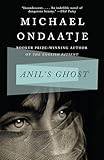
Anil's Ghost review by Athena

A Giller Prize and Governor General's Award winner, Michael Ondaatje weaves a story about Anil Tissera, a Sri Lankan who has studied and relocated abroad, returns to her native country as a forensic anthropologist sent by an international organisation on a human rights investigation amidst the violent civil conflict. She becomes embroiled in the unsafe political climate, trying to solve the mystery of a skeleton while rediscovering her personal history.

Many years ago, I read The English Patient. While I found the prose very nice at times, I did not feel for any of the characters or were particularly enchanted or engaged with them or the story. Like in TEP, Ondaatje shifts between narratives, flashbacks and perspectives in this book. It is his trademark non-linear prose style. Scenes are revisited more than once and dispensed later as if in memory of conversations past. Going forwards and backwards like short stories or vignettes in the novel. People in or affected by conflict seems to be a theme of his, such as World War II in TEP or the Sri Lanka civil conflict in this novel. The internal emotional life and identity affected by the external, violent conflicts, and there are many strangers amidst the confusion. I have noticed also that both books include people who have extramarital affairs and lost loves.

Sometimes I felt I was watching the characters through a screen or a gauze. I saw them move, but I couldn't quite get the feel of them or who they were. There were a few moments, I liked, but overall, I still have not warmed to Ondaatje's style. He introduced too many characters, and the plot suffers as a result. Being a character novel would be fine, but I was apathetic towards most of the characters. The book was slow even if it did not take me long to read. I think the book has some interesting themes, but falls short in pacing, plot and certain characterizations.

Crossposted from Aquatique.net

Clara Callan, by Richard Wright

This was my November read, and I really enjoyed it! It won the 2001 Governor General's Award (Canada), and the 2001 Giller Prize. It's the journal and letters of the title character, writing to her sister who has moved to New York City, right before World War II. I found it to be a great read, and particularly evocative of time and place.

If you are interested in reading my ramblings, my review is here.

Happy Holidays, everyone!

Silverwing & Dust

Books Number 10 and 11 for me in this challenge are award winning Canadian children's books.


Silverwing by Kenneth Oppel
First in the Silverwing Trilogy


Pages: 274
First Published: 1997
Genre: YA, animal fantasy
Awards: Mr. Christie's Book Award, CLA Children's Book of the Year, OLA Silver Birch Award
Rating: 4/5

First Sentence:


Skimming over the banks of the stream, Shade heard the beetle warming up its wings.


Comments: When Shade a young Silverwing bat is blown off course during his colony's migration south, he is determined to find his way back to them. An impending war between the bats and birds, and a hungry vampire bat recently escaped from a observatory make his journey even more challenging. I couldn't put this one down. An utterly compelling story with interesting characters. The book ends with a set-up for the next in the trilogy and I'm looking forward to reading it. Recommended


Dust by Arthur Slade


Pages: 168
First Published: 2001
Genre: YA, science fiction
Awards: Governor General's Award, Saskatchewan Book Award, Mr. Christie's Book Award
Rating: 5/5

First Sentence:


Matthew Steelgate had five cents in his pocket and a yearning for chewing gum and licorice.


Comments: When Robert's 7-year old brother disappears from a 1930s Saskatchewan prairie town it is only the first of many strange things that happen. He starts to have strange dreams, his parents seem to forget his brother, the local reverend starts making animal noises and an ivory-skinned man has arrived in town promising to make a rain machine. The first chapter describes the disappearance of the little boy and is utterly chilling. I was hooked at that point and couldn't stop reading. It's a short book and I don't want to give anything away by saying too much so I'll just say Slade has written a book which is a cross between Stephen King and W.O. Mitchell. I was at turns reminded of Who Has Seen the Wind and Needful Things. I will definately be reading others by this author.

-Nicola

The Handmaid's Tale - Wendy's Review

It was after the catastrophe, when they shot the president and machine-gunned the Congress and the army declared a state of emergency. They blamed it on the Islamic fanatics, at the time. Keep calm, they said on television. Everything is under control. - From The Handmaid's Tale, page 174-

Margaret Atwood's futuristic novel - The Handmaid's Tale - is timeless and relevant. Set in the fictional Republic of Gilead and spanning the Eastern seaboard of the United States after the collapse of the American government, the novel is narrated by Offred...a young Handmaid whose sole purpose in life now is to be the vessel for producing a baby for the upper classes. Atwood creates a terrifying hierarchy with men being "on top" and women being relegated to a variety of freedom-less classes such as Wives (top ranked married women who are unable to conceive), Daughters (the adopted offspring of wives), Marthas (infertile, single, older women whose skills at domesticity keep them from being shipped off to the Colonies), Econowives (low-ranked married women who must "do it all"), Handmaids (fertile women whose sole function is to provide babies for the upper echelon), Aunts (the only women who have any autonomy and are used to train and monitor the Handmaids), and Jezebels (the prostitutes who are hidden away in hotels and used for men's pleasure). Atwood uses irony effectively with Biblical references and play on words to craft a compelling story.

The novel questions how much freedom we are willing to give up in the guise of safety. Viewed in respect to our current world and political environment of red alerts, government lies to enact war, terrorism, airline security, phone tapping and the whittling away of individual freedoms...The Handmaid's tale is a thought-provoking expose on what could happen when we willingly give up our freedoms to supposedly ensure our safety. Are we on a slippery slope? Atwood also questions our sources of information (ie: the news media).

The anchorman comes on now. His manner is kindly, fatherly; white hair and candid eyes, wise wrinkles around them, like everybody's ideal grandfather. What he's telling us, his level smile implies, is for our own good. Everything will be all right soon. I promise. There will be peace. you must trust. you must go to sleep, like good children. He tells us what we long to believe. He's very convincing. -From The Handmaid's Tale, page 83-

Atwood is a genius at creating character. Offred's voice is pitch perfect, taking the reader step by step through her horrible story. Even Serena Joy, the Commander Fred's wretched wife, elicits sympathy from the reader. Atwood's skill with language has never been more spot on then in this novel where she twists words and phrases, showing the reader that all is not as it seems.

But all of that was pertinent only in the night, and had nothing to do with the man you loved, at least in daylight. With that man you wanted it to work, to work out. Working out was also something you did to keep you body in shape, for the man. If you worked out enough, maybe the man would too. Maybe you would be able to work it out together, as if the two of you were a puzzle that could be solved; otherwise, one of you, most likely the man, would go wandering off on a trajectory of his own, taking his addictive body with him and leaving you with bad withdrawal, which you could counteract by exercise. If you didn't work it out, it was because one of you had the wrong attitude. Everything that went on in your life was thought to be due to some positive or negative power emanating from inside your head. -From The Handmaid's Tale, pages 226-227-

I was hooked by the story from page one and read it straight through in two days.

The Handmaid's Tale
is on the ALA's list of 100 most banned books. It was short listed for the Booker Prize in 1986, won the Governor General's Award in Canada in 1985, and made the Orange Prize list of 50 Essential Reads. Brilliant, chilling, suspenseful, and masterly written - this novel is a modern classic.

Highly recommended; rated 5/5; read my original review here.

Jane Urquhart - The Underpainter

I recently finished my 5th selection for this challenge, The Underpainter by Jane Urquhart. Here is an excerpt from my review:

The Underpainter is narrated by an elderly painter named Austin and covers a large span of his life, from his childhood into his forties. I mentioned before that this book reminds me of Philippe Claudel's Les Ames Grises and this is mostly because the tone of the narrator is so similar – such sorrow and regret, and such a need to account for his life. Austin circles in and out of his own story and the story of one of his friends – George. The two stories are, of course, linked far more deeply than is initially expected. And the way Urquhart moves us through these men’s lives is so adept, each new experience echoing another...

See the rest of this post at my blog here

The Tin Flute

The Tin Flute by Gabrielle Roy
Translated by Alan Brown

First Published: 1945
Award: Governor General's Award

Nineteen year old Florentine Lacasse works in a diner at the back of a department store. She is the eldest of 11 children with one more on the way. Her father has never held a steady job and she is the primary money earner of the family. Florentine is chasing after a young man who is rising up in the world, yet he holds her in disdain for the poverty she exudes.

This is a novel of characters and far from a plot-driven story. We intimately get to know the parents of Florentine, a couple of her siblings and the two men in her life. These people become a part of your life as you learn their innermost thoughts.

Set in 1939, during the first year of Canada's involvement in World War II, The Tin Flute is a stark portrayal of poverty. This is a dark, tragic story in a world where men sign up for the army to escape from their poverty.

The first 100 pages were very slow and hard for me to read. I almost gave up on this book but I'm very glad I didn't. This is one of those books that will haunt me for a very long time.

Please come visit me on my blog.

Street of Riches

Street of Riches (Rue Deschambault)
by Gabrielle Roy
Governor General's Award Winner 1957.

This book retells tales from a girl named Christine growing up in French-Canadian community of St. Boniface (now Winnipeg), Manitoba in the early twentieth century. Originally published in French, it is in Roy's autobiographical and vignettes style. I've read one other Roy book before this, and I chose this because I needed to brush up my French and my Canadian literature. The former did not work out as it took me weeks to finish this 160 page book due to real life, and I read only two chapters in French. I finished it mostly in English for time constraints. The book is not fast paced either. The vignettes creating a feeling of short stories of similar characters. I think Roy is a good writer, and she's certainly smart and observant about Canadian culture especially in regards to its minorities. Her style of writing characters is simple, but somehow very poignant. There are some nice moments in this novel. This does not mean I'll read even more from her; the vignettes sometimes made me wish for a more cohesive plot. The novel is a story of growing up in Canada, and I think I could relate to it even today. It's probably a very candid and honest look of Canada in the early twentieth century. I wouldn't recommend this to everyone though because of the pace, but like all stories about growing up, we can glean things from it.

Crossposted from Original Review.

The Handmaid's Tale by Margaret Atwood---Gautami's 6th book

Title: The Handmaid’s Tale
Author: Margaret Atwood
ISBN: 0770428207
Publisher: Seal Books
Genre: Fiction/388 pages


The Handmaid’s Tale is my first book by Atwood. It kept lingering in my mind long time after I finished reading it. It follows in the footsteps of Brave New World and Nineteen Eighty Four creating a cold fear in the heart by imagining it to be true.

As the title conveys, it is a story of a handmaid, Offred in an imaginary place called Gilead, which was previously known as the USA. Every month on a day called the ceremony, she has to lie on her back in the bed of commander and his wife and pray for him to make her pregnant. In that bed, all three lay together, the wife holding her hands and commander doing the needful. She keeps staring at the roof while the ritual is being performed. Handmaids are valued only because of what they can provide via their wombs.

She is allowed a walk once a day to the market along with another handmaid in the neighbourhood. She keeps thinking of her husband, Luke, her daughter, her best friend, Moira and her mother. She has nothing to record her thoughts as reading and writing is forbidden for females. She keeps all those in her mind wishing to write those down some day. Does she escape? Only time will tell.

To read more, click The Handmaid's Tale on My Own Little Reading Room.

This book won the following awards:

Governor General's Award 1985

Los Angeles Times Book Prize 1986
Arthur C. Clarke Award 1987

Dance of the Happy Shades

I just posted my review of Dance of the Happy Shades, by Alice Munro, on my blog (it's the second title discussed). This was the winner of the 1982 Governor General's Award in Canada, and is a collection of short stories. I really enjoyed reading this, and it has made me want to explore Munro's writing further.

Governor General's Award: The Handmaid's Tale

I enjoyed Atwood’s book very much. I have often found myself a fan of works which explore possible dystopias, those futures that we do not fear, but perhaps should. The land of Gilead is, perhaps, the scariest I’ve encountered yet (after all, books are contraband!).
I loved that we are left wondering what exactly happened; are the people who come for Offred at the end really part of the underground movement or have her “uncouth” actions been found out? We are left with several different possibilities – did she escape, did she become an Unwoman, was she caught crossing the border? We can believe whichever we choose; we are forced, like she was so often forced during her time as a Handmaid to wonder what happened, what fate became these people.
I appreciate what Atwood seems to be saying about self-delusion in the novel. Offred knows Luke is probably dead, but is able to trick herself into imaging numerous possibilities for him. I think we all delude ourselves at times, in order to make our lives easier. Though our situations most often are not so dire, I think her ability to fool herself is what allows her to survive. Otherwise, she may have ended up as one of those women who took their own lives, because that is probably when suicide happens – when one can’t see any other possibility.
But perhaps most striking is the thought that this world is possible, that the reader is able to believe in this possibility, that the world could move in this direction.

A Favorite Quote:

“The things I believe can’t all be true, though one of them must be. But I believe in all of them, all three versions of Luke, all at the same time. The contradictory way of believing seems to me, right now, the only way I can believe anything. Whatever the truth is, I will be ready for it.
This also is a belief of mine. This also may be untrue.”

Crossposted at my blog.

Final decisions

Hello, I'm Bridget, from The Ravell'd Sleave, and this is my first book challenge. I [think] I have made my final decisions for my list. I tried to choose a few things I know about, and have wanted to read, but mainly things I may not otherwise have chosen. So we'll see how that works ...

1. Bruce Chatwin, On the Black Hill (1982 Costa/Whitbread)
2. Alice Munro, Dance of the Happy Shades (1968 Governor General)
3. Thea Astley, The Well-Dressed Explorer (1962 Miles Franklin Literary Award)
4. Jessica Anderson, The Impersonators (1980 Miles Franklin Literary Award)
5. Richard B. Wright, Clara Callan (2001 Governor General) (2001 Giller)
6. Ian McEwen, Atonement (2002 National Book Critics Circle Award)
7. Edward P. Jones, The Known World (2005 IMPAC/Dublin) (2004 Pulitzer)
8. Gina Berriault, Women in Their Beds (1997 PEN/Faulkner) (1996 National Book Critics Circle Award)
9. Geraldine Brooks, March (2006 Pulitzer)
10. Ellen Glasgow, In This Our Life (1942 Pulitzer)
11. Loren D. Estelman, The Undertaker's Wife (2006 Spur Award)
12. Ellen Recknor, Prophet Annie (2000 Spur Award)

(Is it a bad sign, if just typing all of it wears me out???)

Alyson's Selections

Here's my list of twelve and a few alternates, in case I finish early:
1. Michael Cunningham's The Hours (1999 Pulitzer)
2. Albert Camus' The Plague (1957 Nobel)
3. Cormac McCarthy's All The Pretty Horses (1992 National Book Award)
4. Margaret Atwood's The Handmaid's Tale (1985 Governor General's Award)
5. Marilynne Robinson's Gilead (2004 NBCC Award)
6. Ann Patchett's Bel Canto (2002 Pen/Faulker Award)
7. Gabriel Garcia Marquez's One Hundred Years of Solitude (1982 Nobel)
8. T.S. Eliot's The Wasteland (1948 Nobel)
9. Ann Tyler's The Accidental Tourist (1985 NBCC Award)
10. Yan Martel's The Life of Pi (2002 Man Booker Prize)
11. Michael Ondaatje's Anil's Ghost (2002 Governor's General)
12. Sarah Dunant's Birth of Venus (2005 Book Sense Adult Fiction Honor Book)

Alternates:
Reading Lolita in Tehran (2004 Book Sense Adult Nonfiction Winner)
Anita Diamant's The Red Tent (2001 Book Sense Adult Fiction Winner)
Barbara Kingsolver's The Poisonwood Bible (2000 Book Sense Adult Fiction Winner)

As I read them, I'll post reviews at my blog Bibliophiles Anonymous. Can't wait to get started!

Verbivore's List

Verbivore here - I realized that I never posted my list here, only on my site. So without further ado, this is what I shall be dipping into for a lovely year of reading. I took books from eight different awards (Pen/Faulker, Man Booker, Costa/Whitbread, Canadian Governer General Award, National Book Award, National Book Critics Circle Award, Orange Prize, Pulitzer) and made sure I picked six women and six men.

Here are my selections:
Gilead, Marilynne Robinson
Snow Falling on Cedars, David Guterson
The Echo Maker, Richard Powers
Middlesex, Jeffrey Eugenides
The Underpainter, Jane Urquhart
The Curious Incident of the Dog in the Nighttime, Mark Haddon
Waiting, Ha Jin
In America, Susan Sontag
Life of Pi, Yann Martel
Bel Canto, Ann Patchett
When I Lived in Modern Times, Linda Grant
The Idea of Perfection, Kate Grenville

Plus a few others that I'm sure will make it into my hands for more hours of reading fun. I'll be reading one for every month starting with Gilead in July. Anyone else reading this one? Looking forward to our cross-posting and discussing!

Matt's List

Hey, this is Matt from A Variety of Words where I'll be posting reviews of these books as I complete them. Fantastic idea for a reading challenge. This is only the second challenge I've joined and I'm looking forward to getting started. I ended up with about 19 books on my list so I'm posting the 12 plus 7 alternates.

  1. Voices from Chernobyl by Svetlana Alexievich (NBCC)
  2. The Blind Assassin by Margaret Atwood (Man Booker)
  3. Ender's Game by Orson Scott Card (Hugo, Nebula)
  4. Europe Central by William Vollmann (National Book Award)
  5. The Adventures of Augie March by Saul Bellow (National Book Award)
  6. Invisible Man by Ralph Ellison (National Book Award)
  7. One Hundred Years of Solitude by Gabriel Garcia Marquez (Nobel)
  8. Half of a Yellow Sun by Chimamanda Ngozi Adichie (Orange)
  9. Beloved by Toni Morrison (Pulitzer, Nobel)
  10. A Confederacy of Dunces by John Kennedy Toole (Pulitzer)
  11. To Kill a Mockingbird by Harper Lee (Pulitzer)
  12. The Age of Innocence by Edith Wharton (Pulitzer)
And now for some alternates just in case I decide to change it up a bit.
  1. The Handmaid's Tale by Margaret Atwood (Governor General, Arthur C. Clarke)
  2. Perdido Street Station by China Mieville (Arthur C. Clarke)
  3. Spin by Robert Charles Wilson (Hugo)
  4. Bel Canto by Ann Patchett (Pen/Faulkner, Orange)
  5. The Good Earth by Pearl S. Buck (Pulitzer)
  6. Lonesome Dove by Larry McMurtry (Pulitzer, Spur)
  7. Seeker by Jack McDevitt (Nebula)
  8. War Trash by Ha Jin (Pen/Faulkner)
Nearly every one of these book was already on my list, and some I had been putting off, but no longer!

Athena's Before Challenge Reads

Hello, I'm Athena of aquatique.net. Joining reading challenges seem to be a new habit of mine. I really look forward to the book discussions and making my own lists. These are the books I've already read over the years. Most of these books I've liked. Feel free to ask about any of them.

Booker Prize:
The English Patient by Michael Ondaatje (also a Governor General's Award winner)
Life of Pi by Yann Martel

British Book Award:
Harry Potter and the Half-Blood Prince by J.K. Rowling
The Da Vinci Code by Dan Brown
Eats, Shoots & Leaves by by Lynne Truss
Stupid White Men by Michael Moore
Bridget Jones's Diary by Helen Fielding

Commonwealth Writers Prize:
Captain Corelli's Mandolin by Louis de Bernieres

Costa (Whitbread) Book Awards:
The Amber Spyglass (HDM Book 3) by Philip Pullman
The Curious Incident of the Dog in the Night-Time by Mark Haddon

Giller Prize:
Alias Grace by Margaret Atwood

Governor General's Award:
The Handmaid's Tale by Margaret Atwood

Hugo Award:
American Gods by Neil Gaiman (also a Nebula)
Fahrenheit 451 by Ray Bradbury
Dune by Frank Herbert (also a Nebula)
Harry Potter and the Goblet of Fire by J.K. Rowling

National Book Award:
Cold Mountain by Charles Frazier
The Shipping News by E. Annie Proulx (also Pulitzer)

Newbery Medal Award:
Island of the Blue Dolphins by Scott O'Dell
A Wrinkle in Time by Madeleine L'Engle
The High King by Lloyd Alexander
Number the Stars by Lois Lowry
The Giver by Lois Lowry
The Midwife's Apprentice by Karen Cushman
Holes by Louis Sachar

Nobel:
Herman Hesse - Siddhartha
Albert Camus - The Stranger
John Steinbeck - East of Eden, Grapes of Wrapth, Of Mice and Men
Gabriel Garcia Marquez - One Hundred Years of Solitude, Love in the Time of Cholera, and couple of others.
William Golding - Lord of the Flies
Jose Saramgo - Blindness, The Cave

PEN/Faulkner:
The Hours by Michael Cunningham (also a Pulitzer)

Pulitzer Prize:
Middlesex by Jeffrey Eugenides
The Age of Innocence by Edith Wharton
Grapes of Wrath by John Steinbeck
The Old Man and the Sea by Ernest Hemingway
To Kill a Mockingbird by Harper Lee

I've been using Lists of Bests for a couple years, which has allowed me to easily keep track of relevant lists and books I've read (and can compare with others). They have all the lists in the challenge, and I've tagged them BARC. Hope this tool helps anyone else.

BC (Before Challenge) Reads by 3M

Award winners I read in the first half of 2007 (not counted for the challenge):
Angle of Repose **** (Pulitzer)
Atonement ***1/2 (NBCC)
To Kill a Mockingbird ***** (Pulitzer)
The Echo Maker **** (NBA)
The Road ****1/2 (Pulitzer)
Everyman * (PEN/Faulkner)
The Giver ****1/2 (Newbery)
March ***1/2 (Pulitzer)
The Inheritance of Loss ***1/2 (Booker/NBCC)
The Handmaid's Tale ****1/2 (Governor General)
The Stone Diaries ****1/2 (Pulitzer/NBCC/Governor General)
Amos Fortune, Free Man **** (Newbery)
The Color Purple **** (Pulitzer)
A Wrinkle in Time **** (Newbery)
Number the Stars **** (Newbery)
Jonathan Strange & Mr. Norrell ****1/2 (World Fantasy/Hugo)
The Bone People **** (Booker)
Wild Swans ****1/2 (British Book of the Year)

Award-winners read before 2007:
Gilead by Marilynn Robinson ***** (Pulitzer/NBCC)
The Old Man and the Sea by Ernest Hemingway ****1/2 (Pulitzer)
The Grapes of Wrath by John Steinbeck ****1/2 (Pulitzer)
Beowulf translated by Seamus Heaney ***** (Whitbread)
The Chatham School Affair by Thomas H. Cook ****1/2 (Edgar)
The Whipping Boy by Sid Fleischman (Newbery) *****
Jacob Have I Loved by Katherine Paterson (Newbery) ****
Bridge to Terabithia by Katherine Paterson (Newbery) ****1/2
The Bronze Bow by Elizabeth George Speare(Newbery) *****
Island of the Blue Dolphins by Scott O'Dell (Newbery) ****1/2
The Witch of Blackbird Pond by Elizabeth George Speare (Newbery) ****1/2
...And Now Miguel by Joseph Krumgold (Newbery) ****1/2
Caddie Woodlawn by Carol Ryrie Brink (Newbery) ****1/2


Governor General's Award (Canada)

http://en.wikipedia.org/wiki/Governor_General%27s_Award_for_English_language_fiction

1936 - Bertram Brooker, Think of the Earth
1937 - Laura G. Salverson, The Dark Weaver
1938 - Gwethalyn Graham, Swiss Sonata
1939 - Franklin D. McDowell, The Champlain Road
1940 - Ringuet, Thirty Acres
1941 - Alan Sullivan, Three Came to Ville Marie
1942 - G. Herbert Sallans, Little Man
1943 - Thomas H. Raddall, The Pied Piper of Dipper Creek
1944 - Gwethalyn Graham, Earth and High Heaven
1945 - Hugh MacLennan, Two Solitudes
1946 - Winifred Bambrick, Continental Revue
1947 - Gabrielle Roy, The Tin Flute
1948 - Hugh MacLennan, The Precipice
1949 - Philip Child, Mr. Ames Against Time
1950 - Germaine Guèvremont, The Outlander
1951 - Morley Callaghan, The Loved and the Lost
1952 - David Walker, The Pillar
1953 - David Walker, Digby
1954 - Igor Gouzenko, The Fall of a Titan
1955 - Lionel Shapiro, The Sixth of June
1956 - Adele Wiseman, The Sacrifice
1957 - Gabrielle Roy, Street of Riches
1958 - Colin McDougall, Execution
1959 - Hugh MacLennan, The Watch That Ends the Night
1960 - Brian Moore, The Luck of Ginger Coffey
1961 - Malcolm Lowry, Hear Us O Lord from Heaven Thy Dwelling Place
1962 - Kildare Dobbs, Running to Paradise
1963 - Hugh Garner, Hugh Garner's Best Stories
1964 - Douglas LePan, The Deserter
1965 - (none)
1966 - Margaret Laurence, A Jest of God
1967 - (none)
1968 - Alice Munro, Dance of the Happy Shades
1969 - Robert Kroetsch, The Studhorse Man
1970 - Dave Godfrey, The New Ancestors
1971 - Mordecai Richler, St. Urbain's Horseman
1972 - Robertson Davies, The Manticore
1973 - Rudy Wiebe, The Temptations of Big Bear
1974 - Margaret Laurence, The Diviners
1975 - Brian Moore, The Great Victorian Collection
1976 - Marian Engel, Bear
1977 - Timothy Findley, The Wars
1978 - Alice Munro, Who Do You Think You Are?
1979 - Jack Hodgins, The Resurrection of Joseph Bourne
1980 - George Bowering, Burning Water
1981 - Mavis Gallant, Home Truths: Selected Canadian Stories
1982 - Guy Vanderhaeghe, Man Descending
1983 - Leon Rooke, Shakespeare's Dog
1984 - Josef Skvorecky, The Engineer of Human Souls
1985 - Margaret Atwood, The Handmaid's Tale
1986 - Alice Munro, The Progress of Love
1987 - M.T. Kelly, A Dream Like Mine
1988 - David Adams Richards, Nights Below Station Street
1989 - Paul Quarrington, Whale Music
1990 - Nino Ricci, Lives of the Saints
1991 - Rohinton Mistry, Such a Long Journey
1992 - Michael Ondaatje, The English Patient
1993 - Carol Shields, The Stone Diaries
1994 - Rudy Wiebe, A Discovery of Strangers
1995 - Greg Hollingshead, The Roaring Girl
1996 - Guy Vanderhaeghe, The Englishman's Boy
1997 - Jane Urquhart, The Underpainter
1998 - Diane Schoemperlen, Forms of Devotion
1999 - Matt Cohen, Elizabeth and After
2000 - Michael Ondaatje, Anil's Ghost
2001 - Richard B. Wright, Clara Callan
2002 - Gloria Sawai, A Song for Nettie Johnson
2003 - Douglas Glover, Elle
2004 - Miriam Toews, A Complicated Kindness
2005 - David Gilmour, A Perfect Night to Go to China
2006 - Peter Behrens, The Law of Dreams
2007 - Michael Ondaatje, Divisadero
2008 - Nino Ricci, The Origin of Species
2009 - Kate Pullinger, The Mistress of Nothing
2010 - Dianne Warren, Cool Water
2011 - The Sisters Brothers, Patrick deWitt